Market Insight · Adelaide
Land Size Is Not Land Value: How Land Is Really Valued in Adelaide
The square metre has ruled Adelaide's property conversation for too long. It is a convenient measure, and often the wrong one.
Land value in Adelaide is routinely confused with land size, and the gap between the two carries real money. It separates a well-priced property from a mispriced one, and in some cases separates a development site worth millions from a parcel that sits unsold. Understanding what actually drives land value is foundational strategy, not technical detail.
Why raw size became the default
Measuring land by area once made sense. During Adelaide's post-war expansion, larger lots genuinely meant higher value. A 900 square metre block in Burnside signalled prestige, subdivision was uncommon and orientation rarely drove price. That context has gone. Infill and density overlays under the State Government's 30-Year Plan have multiplied the variables that decide whether land is usable, subdivisible or genuinely scarce. Yet the shortcut persists. Automated models weight area heavily, agents compare land size in suburb summaries, and buyers negotiate on price per square metre as if it were reliable. As a result, real value and real mispricing routinely go unnoticed.
What actually determines land value
The variables that move a parcel's worth
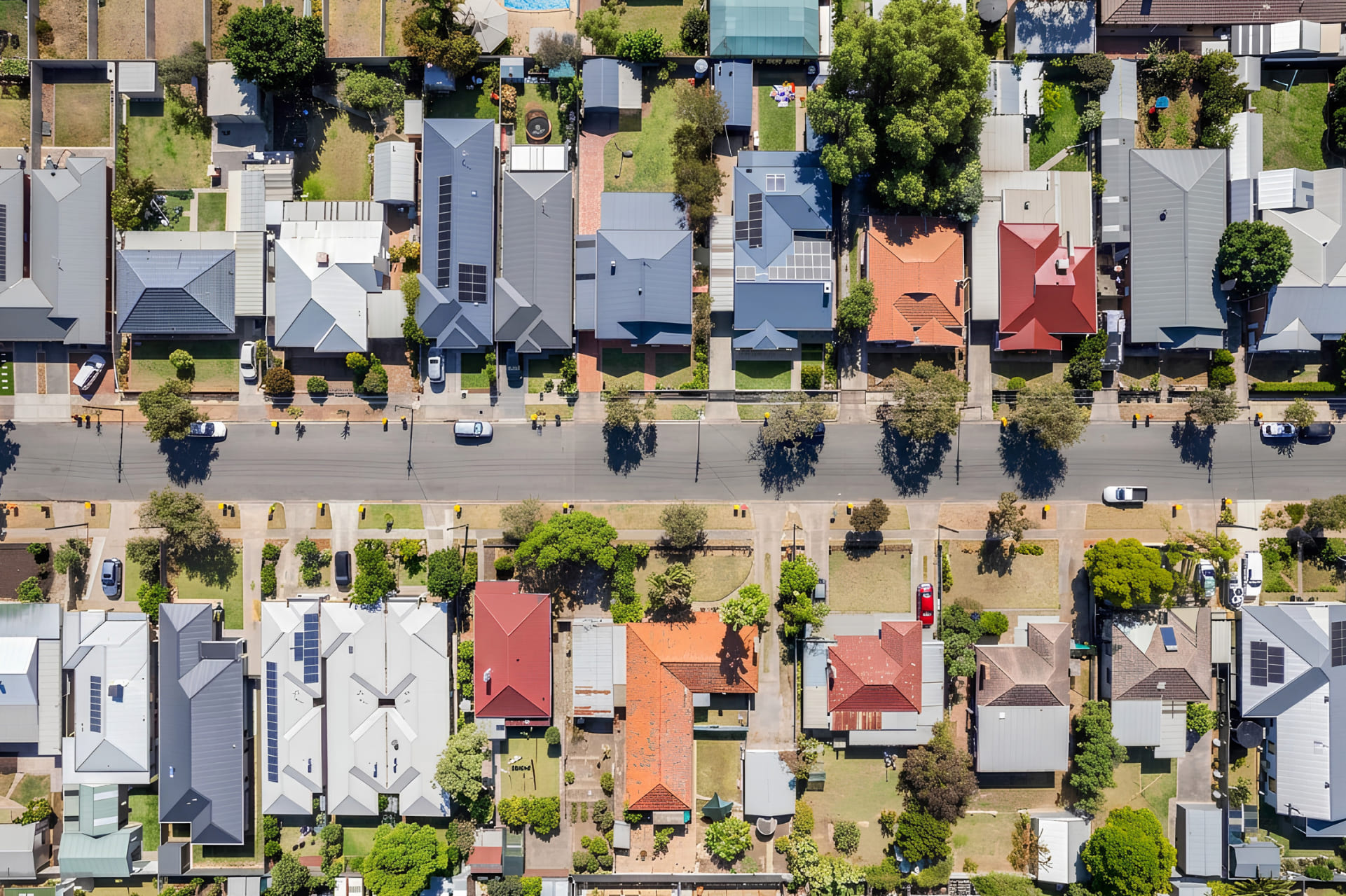
- Configuration and frontage. A regular 700 square metre block with 15 metres of frontage may be subdivisible where an irregular or battle-axe block of the same area is not. Corner allotments often carry a genuine premium for their dual-frontage options, not for their size.
- Orientation and solar access. In South Australia's climate, a north-to-rear 600 square metre block frequently outperforms a south-to-rear 750 square metre block on the same street, in amenity, energy performance and achievable design.
- Easements, encumbrances and overlays. A drainage easement can cut buildable area by ten to thirty percent. A heritage overlay can remove whole development scenarios. None of this shows in the land size, only in title searches and the Planning and Design Code.
- Zoning and development potential. What the Code permits decides value far more precisely than area. A smaller block in a permissive zone can be worth more than a larger block that cannot be subdivided.
What sellers, buyers and investors miss
Sellers often anchor to land-size comparisons from data reports that list area beside sale price without distinguishing configuration, overlay or orientation, and so accept an undervalued price on a genuinely superior site. Buyers use price per square metre as a negotiating anchor, which feels rational but leads to overpaying for large, constrained land and passing on smaller, exceptional land. Investors make the most consequential error of all: using price per square metre to identify cheap land, when feasibility actually depends on buildable envelope, zoning, orientation and infrastructure. Buying on apparent per-metre value without reading the overlays and title is guessing, not due diligence.
The Adelaide context
In inner and middle-ring suburbs such as Unley, Norwood, Prospect and St Peters, land scarcity is real and accelerating. Infill has consumed the easily subdivisible lots, leaving more complex parcels that reward careful reading. The premium for genuinely unencumbered, well-configured, north-facing land has grown, but the adjustment is uneven, so exceptional land is sometimes underpriced and constrained land overpriced. In the outer growth corridors, value ties more to infrastructure sequencing and rezoning timelines than to intrinsic site attributes. In the regions, it turns on production entitlements, vegetation rules and water licensing, where square metres are nearly irrelevant.
How land value should be read
What a proper land assessment examines
- Zone classification and overlays under the Planning and Design Code, including heritage, character, bushfire, flooding and density.
- A title and encumbrance search covering easements, rights of way and building envelopes.
- Configuration: frontage, depth, regularity, access and subdivision probability under current minimum allotment sizes.
- Orientation of living areas and rear aspect relative to true north.
- The development narrative, and whether comparable sales have already priced it in or missed it entirely.
This is the same evidence-first discipline that decides whether a home reaches its true value at sale.
Common questions
Why are two blocks of the same size valued so differently?
Because size is only one input. Configuration, frontage, orientation, easements, overlays and zoning often matter more. A regular, north-facing, unencumbered block in a permissive zone can be worth far more than a larger block that cannot be built on or subdivided.
Is price per square metre a reliable way to value land?
No. It ignores the variables that actually drive value and development potential. It can make constrained land look cheap and exceptional land look expensive. Useful as a rough reference, misleading as a decision.
How do I know if my land is subdivisible?
It depends on zoning, minimum allotment size, configuration, frontage and any overlays or easements on the title, not on area alone. A proper assessment reads the Planning and Design Code and the title together. This is general information, not planning or legal advice.
Have your land read properly, not just measured
Whether you are selling a site with unrecognised potential or assessing an acquisition, Willow is glad to work through the specific attributes that determine what your land is actually worth.
Request a strategic appraisalThis article is general information for South Australian property owners and investors and is not planning, financial or legal advice. Confirm zoning, overlays and title details for any specific parcel before acting.